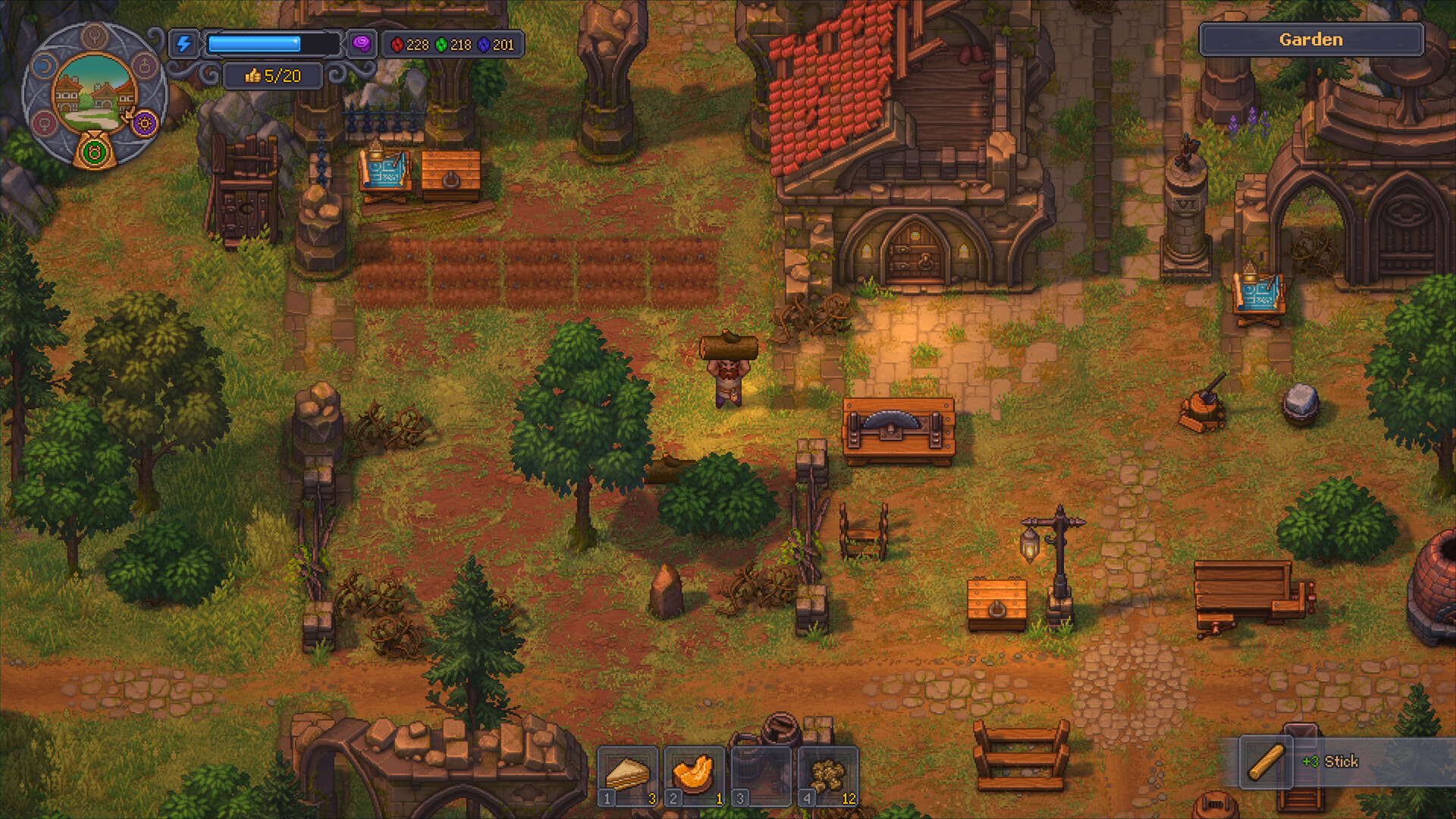
Honey and farming in Graveyard Keeper 2 explained: bees, beehives, crops, yields and fertilizers. Learn to keep your energy bar full and your garden growing.
Table of Contents
Mastering the Basics: Why Farming and Honey Matter
Survival in the world of Graveyard Keeper 2 isn't just about managing corpses; it is about maintaining a self-sustaining ecosystem that fuels your energy and research. If you are struggling to keep your energy bar high or running short on green tech points, this honey and farming guide will provide the blueprint you need. Efficient farming is the backbone of your graveyard’s economy, while honey production offers a sweet, renewable source of energy to keep you working through the grueling six-day week.
By mastering the mechanics of crop yields and apiary management, you stop scrambling for resources and start automating your workflow. Whether you are aiming for gold-tier vegetables or efficient mead production, understanding the nuances of bed farming and beehive placement is the fastest way to turn your humble patch of land into a thriving, profitable estate.
Essential Farming Mechanics: Garden Beds and Vine Trellises
Farming in Graveyard Keeper 2 relies on two primary structures: Garden Beds in the Garden for standard crops and Vine Trellises in the Vineyard for grapes and hops. You plant 4 seeds with your own Farming stat (4 planting ticks at 1 energy each), but once the seeds are in, growth is worked against the bed's own Farming value — raised by garden upgrades and fertilizers, not by your personal level.
The Planting and Growth Cycle
Each growth cell that succeeds pays out: odd cells add a seed back, even cells add the crop, and a failed cell adds nothing. Successful planting relies on your character's stats, but once the seeds are in the ground, the garden takes over.
Structure
Bed Farming
Growth Tick
Garden Bed
2
2:00
Garden Bed + Garden Upgrade I
4
1:45
Garden Bed + Garden Upgrade II
8
1:30
Vine Trellis
raises with the Vineyard Upgrade to 11
2:00 base
Maximize Efficiency with Upgrades
Prioritize the Garden and Vineyard upgrades as early as possible. Reducing the growth tick time effectively increases your total harvest frequency, allowing you to cycle through seeds and fertilizer more rapidly.
Optimizing Yields: Fertilizers and Grades
To achieve higher quality crops, you must move beyond basic planting. The quality of your harvest is determined by the seed's grade and the number of successful growth cells. Fertilizers are not just optional buffs; they are essential for mid-to-late game success.
Fertilizer Strategy
A well-placed fertilizer stays on the bed through multiple harvests. Using the Formulation Bench, you can create advanced substances that push your farming to the next level.
Fertilizer
Effect
Made At
Farming Fertilizer I–III
Raises bed Farming one step per grade
Formulation Bench
Crop Boosting Fertilizer I
+2 cells of growth (tooltip lists 1)
2 Peat + 1 Dream Dust
Headstart Fertilizer I
Growth starts 1 cell in
2 Peat + 1 Weak growth elixir
Headstart Fertilizer II
Growth starts 2 cells in
4 Peat + 1 Rich growth elixir
Headstart fertilizers are the easy one to overlook: starting a crop 1–2 cells in effectively shortens every growth cycle, which compounds across the whole season. Farming Fertilizer I, II and III, Headstart and Crop Boosting fertilizers are all made at the Formulation Bench.
Automating Your Garden with Zombies
Once Zombie Gardening is researched, manual planting becomes optional. The technology unlocks the Gardener Stand, the Lifting Crane and a Tablet for each Garden crop ("Beet", "Wheat", "Cabbage" and the rest).
Build the Infrastructure: A Gardener Stand in the Garden and in the Vineyard (4 Wooden Planks, 2 Bronze Details, 6 Bronze Nails each).
Assign a Tablet: Place the crop tablet for what you want grown.
Storage Integration: The Lifting Crane (8 Wooden Beams, 3 Bronze Gears, 4 Iron Details) carries the Garden's crops into Garden Storage automatically.
Zombies have their own Farming stats: Farmer I adds +2 and Farmer II +4 to a zombie's planting, and Farmer II also pays +1 crop per harvest at one grade higher. Fertilizer Expert gives +3 when the zombie fertilizes.
The Art of Beekeeping: Getting Bees and Honey
Honey is a critical resource in Graveyard Keeper 2. Not only does it provide a quick 5-energy boost when consumed, but it is also a fundamental ingredient in advanced alchemy recipes and high-energy foods like Yogurt and Mead.
How to Get Bees and Honey
You can acquire honey from wild beehives found throughout the world or by building your own Beehive in the Vineyard. Building a beehive requires the "Beekeeping" technology, 2 Wooden Planks, 1 Bronze Detail, and 6 Bronze Nails.
Wild Hives: Provide 1-2 Honey and have a 25% chance to drop Beeswax.
Player Beehives: Provide 3-6 Honey and 1-2 Beeswax every 8 cells of time.
Turn Honey into Sanity Management
Five honey brew a Mead at the Brewing Stand — worth 30 bronze and it removes 10 insanity, making your apiary part of your sanity strategy instead of just your pantry.
Advanced Food Production and Energy Management
Maintaining your energy bar is a constant struggle. Understanding food values is essential for those who want to work long hours without the "Lack of Sleep" penalty. While simple foods are good for early starts, focusing on high-tier recipes will save you significant time.
Top Energy-Restoring Consumables
Elder's Meal: +120 energy and +90 of every tech point color (the tooltip lists only 30) — best for massive construction projects.
Fisherman's Pie: +80 energy plus +30 red, green and blue points.
Burger: +80 energy, but +5 insanity.
Bowl of Sauerkraut (gold): +30 energy and Book writing spirit III (+3 Book writing).
To make the most of honey and farming, incorporate these foods into your daily routine. Avoid eating raw ingredients when you can cook them into meals that provide secondary buffs — cooked dishes can carry a craft spirit such as Book writing or Smithing spirit.
FAQ: Common Questions About Farming and Honey
Q: Why does my garden bed give fewer crops than the 12-cell capacity?
A: Only successful cells pay out. The first 4 cells are used for the planting process, and if any of those fail, you lose potential yield. Ensure your Farming mastery is high enough to minimize planting failures.
Q: Do I need to keep my own Farming skill high for the garden to produce?
A: No. After the initial planting phase, the growth relies entirely on the Bed Farming value (the base value of the bed + any fertilizer active).
Q: How do I get more honey efficiently?
A: Build multiple Beehives in the Vineyard. Since they operate independently and do not require zombie labor, having a cluster of hives ensures a steady stream of honey and beeswax for your alchemy needs.
Q: What is the best way to move from bronze to gold crops?
A: Use high-level fertilizers (Farming Fertilizer III) and ensure your garden beds are fully upgraded. The higher your bed's Farming value, the more likely you are to trigger the "successful cell" bonuses that upgrade your crop quality during the growth cycle.
Mastering these systems will ensure your graveyard not only runs efficiently but thrives. Use the tools provided in this guide to optimize your land, and you will find that the challenges of Graveyard Keeper 2 become far more manageable. Happy farming!